Monday, 15 June 2015

THE SUBARU FORESTER


                       SUBARU FORESTER
Whenever I see one pass by or even parked, I take my sweet time to give it keen long stares; admiring what I personally think is the best SUV architecture in the auto-world. My eyes get glued to it until I either trip a foot or the car disappears from my line of sight. Some say I am addicted and obsessed with it, am talking about the Subaru Forester.

This machine of awesomeness came into being in 1997; a product of Fuji Heavy Industries but selling under Subaru brand. It was unveiled in the Tokyo Motor Show in November 1995 as a Streega concept and begun its sale in February 1997. The SF is a compact crossover that shares a similar platform with the Impreza; built in the style of a car but has a taller stance, higher h-point seating and an All Wheel Drive train. although it has the same platform as the Impreza it had a larger 2.5litre DOHC EJ25D 4-cylinder Boxer engine from the Outback; the train produced 165hp (123Kw) at 5600rpm and a torque of 162lbft(220N.m) at 4000rpm.

The Subaru Forester has successfully drove itself through four generations: The first generation (1997-2002), the second generation (2003-2008), the third generation (2008-2013) and the forth generation (2014-present)

The First Generation (1997-2002)


Much about the power train of this generation's SF has been said in the paragraphs above , so, I am  going to throw in a little more information on the features of the First SF to compliment that. The Forester replaced the Subaru Impreza Gravel Expess in Japan but it still remained in production for the USA market under the name Subaru Outback Sport. Before the appearance of the Forester there existed a vehicle with similar characteristics as itself called Nissan Rasheen in Japan.

Automatic transmission used in AWD Foresters send 60% of the engine's torque to the front wheels and 40% to the rear wheels using a computer controlled, continuously variable, multi-plate transfer clutch. This is how the power is distributed: when the transmission senses a speed difference between the front and rear axle sets, it progressively sends power to the rear wheels and under slip conditions it can gain a 50/50 split in front and rear axle speeds.

When it comes to driving uphill, the weight of the vehicle shifts backward to reduce front wheel traction at the same time causing transmission to send torque automatically to the rear axle set for compensation; the same procedure reverses when it comes to driving downhill for better steering control and braking performance. For automatics, when geared reverse or first gear, the torque is divided 50/50 to both axles, on the other hand, a base setting of 50/50 split torque is given for the manuals, then varied from there; but they are essentially more biased towards the rear than autos.

Basically there were two trim levels: the basic model 'L' and the fully equipped 'S' for the USA version.

Forester L:

 This came with a high level of standard equipment such as:
Subaru Forester L
  •  ABS, 
  •  air conditioning,
  •  power windows,
  • power locks, 
  • cruise control, 
  • digital temperature gauge,
  •  multi-reflector halogen headlights,
  •  fog lights, roof rack, 
  • rear window defogger,
  •  trailer harness connector,
  •  reclining front bucket seats with adjustable lumbar support,
  •  tilt steering, 
  • tinted glass and
  • AM/FM/cassette stereo with its antenna laminated in the left-rear quarter window. 
A notably new feature appeared in 2001; that included the three-point seat-belts for all five seating positions, plus force limiters in front and height-adjustable shoulder belt anchors for front and rear outboard positions, and rear seat headrests for all three seating positions.  

Forester S:
 
This version possessed the following features:
  •  a viscous limited-slip differential, 
  • rear disc brakes, 
  •  16 × 6.5-inch alloy wheels with 215/60R16 tires (the L uses 15 × 6-inch steel wheels), 
  • upgraded moquette upholstery, 
  • heated front seats with net storage pockets in back, 
    Subaru Premium 2001
  • dual vanity mirrors,
  •  heated side view mirrors and
  •  heated windshield wipers, and keyless entry. 
In 2001, the noted new equipment included:
  •  Titanium pearl paint for the bumpers and cladding;
  •  six-disc in-dash CD sound system; 
  • leather-wrapped steering wheel, 
  • shift knob and handbrake handle; 
  • variable intermittent wipers with de-icers and driver’s side fin; and the five-spoke alloy wheels.
2001 Subaru Forester S


 Some models came with optional premium package on the Forester S, such as:
  •  monotone paint (Sedona Red Pearl), 
  • power moonroof, 
  • front side-impact airbags, 
  • gold accent wheels
  • the chrome tailpipe cover, 
  • the automatic transmission and 
  • the auto-dimming rear-view mirror with compass. 


The Second Generation(2003-2008)


At the 2002 Chicago Auto Show, the second generation of the Subaru Forester was introduced as a 2003 model based on the then new Impreza platform. this generation received several fine-tune upgrades in contrast with the previous year model.

This 2003 model featured weight saving refinements such as:
    Chevrolet Forester
  • an aluminum hood,
  • perforated rails and
  • a hydro-formed front sub-frame.
The most noticeable change was the offering of 2.5L versions that were naturally aspirated and turbocharged. All the 2.5litre 4-cylinder engines have a timing belt made of rubber and cord and must be replaced at 105,000 miles (169,000kms). If this is not done, the belt can break or stretch; this will cause the pistons to hit the valves and as a consequence, the interference engines will experience a tear-down which can only be remedied by a rebuild. When changing the belt within the specified distance, it is also advisable to also change the water pump, thermostat, belt tensioner and all the idler pulleys for the belt.
A pair of valves bent by collision with a piston after timing belt breakage.
Before General Motors pulled out as part of Subaru's parent company (Fuji Heavy Industries) stake, the Forester was sold as a Chevrolet along side other unique Chevrolet models; the sales for the Chevrolet-badged Forester ended afterwards.


The Third Generation (2008-2013) 


The model year 2008, was unveiled in Japan on Dec 25, 2007. The North American version debuted in Detroit at the 2008 North American International Auto Show. This model is a product of Mamoru Ishii the chief Subaru Designer. This model's dimensions were derived from the basic body structure of the Japanies-Spec Impreza Wagon with a rear platform of the U.S-spec Impreza Sedan.
2008–2009 Subaru Forester (MY09) XS wagon
There was an increase of the wheelbase 3.5inches (89mm), with overall increases of 3inches (76mm) in length, 1.8inches (46mm) in width and 43inches (110mm) in height. The frameless side windows used on Subarus since early 1970s was forgone in this model year and to top on that, this generation welcomed a car based SUV leaving behind the older wagon design. this Forester model is larger in almost every dimension, featuring a sloping roofline with more cargo space. A redesigned independent double wishbone rear suspension enhances better handling and a smoother ride as compared to the last generation. A sportshift together with the four-speed computer-controlled automatic transmission is also included.
2010_Subaru_Forester_(MY10)_X_wagon interior

A face lift was given to the 2010 and 2011 model years, whereby, the Forester received a new grille insert and an optional roof-rack which means that the height increased by 2.5inches from its base model-height.


The Forth Generation (2014-)


This year's model was unveiled in 2012 Guangzhou Motor Show followed by the 2013 New York International Auto  Show.
2015 Forester
  
The new changes for this model include:
  • Continuously Variable Transmission (CVT) and decreased towing capacity. Maximum towing capacity was reduced to 1,500 pounds across all trim lines. XT (turbo) variants use a high-torque CVT with steering wheel paddle shifter controls.
  • Revised, sport-oriented suspension, wheels (18-inch) and chassis bracing for XT (turbo) variant, providing flatter cornering in turns and better handling overall with little impact on ride.
  • Increased fuel economy, up to 32 mpg highway-EPA rated
  • 1.4 inches longer, 0.6 inches wider, 1 inch longer wheelbase
  • Increased interior volume: rear seat legroom is 41.7 inches and rear cargo volume (with seats folded down) is 74.7 cubic feet.
  • New option on higher end only models is "X-MODE" AWD control system, which was developed for the driving on uneven or slippery road condition. Engine, Transmission and VDC are controlled cooperatively.
  • New option on top of the line 2.5i and 2.0XT Touring models only: EyeSight Driver Assist System
 X-Mode:

This is a feature that allows drivers to go through more extreme conditions whether On or Off road. The concept behind this is that, any driver, regardless of the level of skill they posses, can still drive safely on wet roads and muddy areas.
This mechanism works by distributing torque evenly to all the four wheels and if one or more wheels begin to slip, X-mode kicks in and the Forester moves without traction loss; this therefore means that, there won't be free-spinning tires. After the X-mode is turned on, it stays that way until the vehicle's speed is about 25mph then it disengages itself.

Eye Sight Driver Assist System:

This is Subaru's Eyesight technology that employs the services of stereo cameras mounted on either side of the rear view mirror. The system can be manually turned on or off. It is an optical, instead of radar, based system, it has limitations in poor visibility situations; driving into the sun, fog, or where the windshield is not cleared may cause the system to disengage.
This system offers several driver assist features like:
    Subaru_Forester_2.5XT_Sports
  • Brake Light Recognition
  • Pre-Collision Steering Assist
  • Adaptive Cruise Control
  • Lane Departure Warning
  • Lane Sway Warning
  • Lead Vehicle Start Alert
  • Pre-Collision Braking System
  • Pre-Collision Brake Assist
  • Pre-Collision Throttle Management


Note that, the forth generation is not the last of the Forester Dynasty. MORE generations are still on the road coming; driving through technology as it advances with enhanced style and upgraded power.


Sourced from:
 http://www.subaru.com/vehicles/forester/index.html

http://www.iloveindia.com/cars/general-motors/chevrolet-forester.html

 http://www.edmunds.com/subaru/forester/

https://en.wikipedia.org/wiki/Subaru_Forester

Wednesday, 18 February 2015

Mercedes- AMG SLS Final edition


Mercedes-Benz’s technical director in the 1950s, Rudi Uhlenhaut, had what is arguably the coolest company car in history. It was a gullwing version of the W196S 300SLR race car powered by a 306-hp, 3.0-liter version of Mercedes’ Formula 1 straight-eight engine. His daily driver sprang from his own genius, and the car is now widely known as the Uhlenhaut Coupe. 
The Mercedes-Benz SLS AMG was first revealed at the 2009 Frankfurt Motor Show. Since that time, there have been several versions of the gullwing coupe created, including the fantastic Black Series. Sadly, all good things come to an end, and the final version of the SLS AMG series has been revealed: The Mercedes-Benz SLS AMG GT.

The Mercedes-Benz SLS AMG GT at a glance:

 Just 350 examples will be produced. This sum includes both gullwing and convertible versions of the GT, so the price could skyrocket.This is not only the final SLS AMG, but also the last one to pack the AMG 6.2-liter V8. Future AMG V8 engines will utilize a twin-turbocharged 5.5-liter or a 4.0-liter producing 583 horses with a 0-60 mile per hour sprint of 3.6 seconds. Top speed is an electronically limited 197 miles per hour, ideal for the office commuter. Owners will enjoy the unique Race-Start launch control system on the 7-speed AMG Speed- Shift dual-clutch gearbox. The feature assists with an adrenaline-filled launch each time.

As a retirement gift, AMG has given the engine new camshafts, specially coated bucket tappets, a more efficient intake tract, more-durable crankshaft bearings, and a titanium exhaust system that shaves 29 pounds. The mighty V-8 goes out barking, spitting, and spinning all the way up to 8000 rpm. All 622 horsepower (up from 583 in the SLS GT) show up at 7400 rpm with 468 pound-feet of torque coming in at 5500 rpm. An angry Sprint Cup car–like thrum pulses out of the Black’s four exhaust tips to warn the hard of hearing. Uhlenhaut’s car was also an eardrum destroyer; it had to wear a goofy Samsonite-shaped muffler tacked onto its front fender, presumably to keep Uhlenhaut from getting deported to East Germany.


THE EXTERIOR

The final version of the Mercedes-Benz SLS AMG is fitted with a hood designed to look like carbon fiber. It is unclear why they skimped on using actual carbon fiber for the hoods. The wheels for this version are offered in two styles: matte black with a thin rim flange or in-layed black matte with a high gloss finish. Both options look great with the red brake calipers and racing tires.

THE COCKPIT

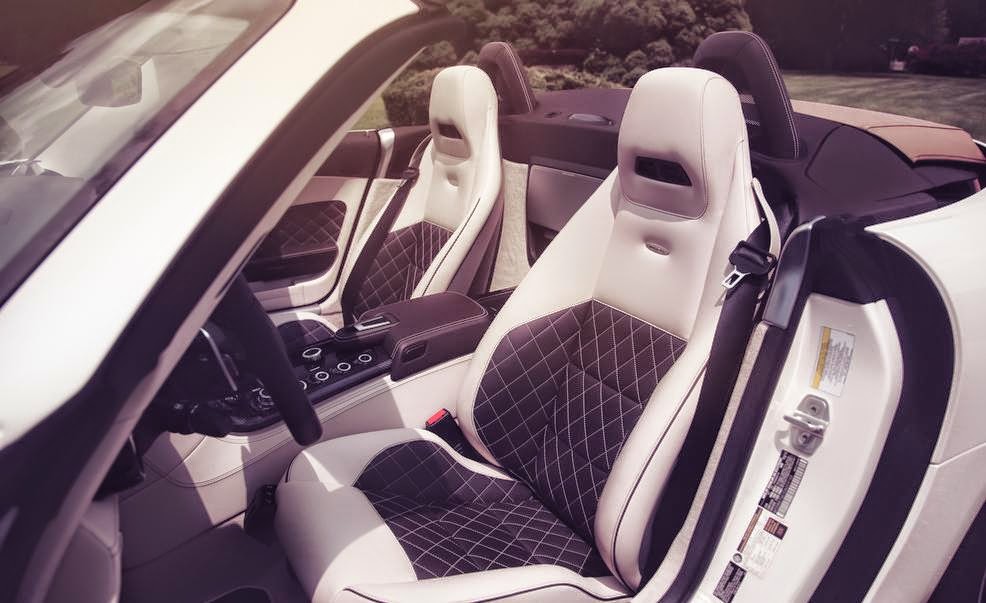
Inside the final Mercedes-Benz SLS AMG is every luxury car owner’s dream: diamond stitched leather, carbon fiber and technology all wrapped around a seat designed for driving. The center console reads “AMG FINAL EDITION” followed by the number out of the 350 units made (5 of 350, for example). While the standard package is impressive, those after more luxury can add the following upgrades: carbon ceramic brakes, Bang & Olufsen BeoSound surround system, carbon fiber exterior mirror cover and engine covers


.
PRODUCTION

Production of the SLS AMG began at Sindelfingen in January 2010.Sales commenced in mid-2010 in Europe and in mid-2011 in the United States.Production was set to end after the SLS AMG GT FINAL EDITION in early 2014. As of December 31, 2014, a total of 2,704 SLS AMGs had been sold in the U.S., including both Gull-wings and roadsters.
The SLS AMG will be replaced by a substantially less costly tourer( Mercedes-AMG GT) with traditional doors and a much smaller forced induction engine, designed to compete against the Porsche 911 and Audi R8. This marks the end of Mercedes' remarkable 6.2 liter naturally aspirated M159 engine. AMG head Tobias Moers said that engine downsizing is becoming ever more important, and that AMG will replace the SLS with "a new sports car in a more (price) accessible segment." As he put it, "There won't be an immediate successor to the SLS AMG. The SLS gave the AMG brand a special brand icon with its iconic Gullwing doors and we like to treat it as something special for both the company and the SLS owners

Overall, the Mercedes-Benz SLS AMG GT is a farewell to a popular car and it will be exciting to see what the brand ushers in next.


Acknowledgments: CAR and DRIVER, MERCEDES-BENZ, AUSmotive.com.

Tuesday, 22 July 2014

2014 Volvo XC60

It all started as a concept in the year 2007 as a preview of what was to be produced as far as the Volvo XC60 is on the picture. The concept provided for a glass roof and a newly styled grill which had a larger Volvo logo along with the 'V' shaped on the Volvo- this was the first DNA which they were to slowly implement through out the model range. The same model also included a new shifting mechanism, electronic bootlid and 20 inch wheels; all these was unveiled at the 2007 North American International Auto Show.

The first generation of the XC60 debuted in 2008, with the production vehicle being unveiled at the 2008 Geneva Motor Show leading to the beginning of its sales in Europe in the third quarter of 2008 as North American models went on sale in early 2009 as a 2010 model.

The XC60 shares technology with the Land Rover Freelander of 2007 and uses a modified version of the Volvo Y20 platform. The Land Rover Discovery 4/LR3 was to set the stage for these corporate siblings to enter the market since the engineering and tuning of this CUV, at least much of it, was done by Volvo in Sweden and only offroad capabilities were done at Land Rover in England

An R-Design variant of the XC60 became available in April 2010 featuring a color-matching body kit, stiffer chassis and damping, plus other unique exterior and interior trim.
Volvo XC60 concept
Volvo XC60 interior

  Volvo went on to produce a refreshed version of the XC60 in February 2013, which was to be released for the 2014 model year. The model comes with exterior changes to the grille and front driving lights, loss of black cladding along the lower doorsills and minor changes to the exhaust tips and taillights-the changes are majorly cosmetic. The interior facelifts include: new materials and dashboard trims- the dash is now wrapped in leather on most models and lifts the already pleasant cabin even higher, but otherwise the interior follows the outgoing model’s blueprint, with the exception of the new adaptive digital display(7" touch-screen display) and a peddle shifter is available on the T6 model.

In order to boost the promotion of the XC60, Volvo used the 2009 film: The twilight Saga: New Moon plus an online contest to give away models identical to the one the lead character Edward Cullen drove. Volvo had to think very hard about the XC60 upgrade since fixing something that its customers don't think is broken is a terrific way of driving them away.

While the revised XC60 is just one in a huge campaign of updates- the largest in the history of the brand, most changes are hardly spotted externally. The mild styling refresh can be spotted by the slimmer, wider headlamps, subtle vertical LED running lights, the new wheels and a strip of LED lights in the signature rear light cluster- the shape that has been wisely left well done. other small refinements include:Color-coding of some parts, hidden windscreen washer nozzles and new designs for the R-Design bumpers and interiors. The XC60 also comes with a new steering wheel, revised interior trim and a torque-vectoring stability control system.

ENGINE:
 With the exception of the previous naturally-aspirated 3.2-litre in-line six, the engine line-up carries over the current two five-cylinder D4 and D5 diesels and two petrols – four-cylinder T5 and turbocharged six-cylinder T6.

The 2.0-litre D4 puts out 120kW and 400Nm of torque while the 2.5 D5 rises to 158kW and 440Nm. Both have a claimed fuel usage of 6.9l/100km on the combined cycle and make it to 100 in 10.3 and 8.3 seconds respectively. Volvo expects the D5 all-wheel drive Luxury to be the top-selling model.
The T5 is a 2.0-litre turbo petrol, good for 177kW and 320Nm while the T6 is the 3.0-litre straight six with 224kW and 440Nm of torque.

The D5 and T6 can both be specified with the Polestar optimization in the R models. That boosts the D5's power by 11kW and torque by 30Nm, shaving two tenths off the 7.1 second 0-100km/h time. The T6 jumps 18kW and 40Nm to 480Nm, again knocking two-tenths of the sprint to 100, down to 6.6 seconds. All apart from the T5 are equipped with six-speed automatic transmissions while the T5 ships with a six-speed double-clutch Powershift.


Manufacturer Volvo Cars
Production 2008–present
Assembly Ghent, Belgium
(by Volvo Cars Ghent factory)
Daqing, China
Body and chassis
Class Compact executive crossover SUV
Body style 5-door SUV
Layout Front engine, front-wheel drive / all-wheel drive
Platform Volvo Y20 platform
Related Land Rover Freelander
Ford Mondeo
Volvo V70
Volvo S80
Powertrain
Engine
  • 3.0 T6 Turbo Petrol I6
  • 2.0 T5 Turbo Petrol I5
  • 3.2 NA Petrol I6
  • 2.5 D5 Turbo Diesel I5
  • 2.0 D3 Turbo Diesel I5
Transmission 6-speed AWTF-80 SC automatic
6-speed manual
Dimensions
Wheelbase 2,774 mm (109.2 in)
Length 4,628 mm (182.2 in)
Width 1,891 mm (74.4 in)
Height 1,715 mm (67.5 in)


SOURCES:


Monday, 14 July 2014

Subaru BRZ

It was built at the company's Ota plant in Japan as a joint venture with the company's part owner Toyota; the BRZ sales were launched online and due to the improved supply from the Japanese factory, the sports coupe is now being retailed by dealers. The two companies engaged in a division of labor strategy where, according to Cars Guide; Toyota took part in the product planning and styling while Subaru did the engineering development and build.

The Subaru BRZ breaks new ground for the Australian company by coming in a Rear-Wheel-Drive since all the other models sold have been All-Wheel-Drive (AWD) still baring in mind that Subaru does make Front-Wheel-Drive (FWD) cars too.

According to Cars Guide , Nick Senior, the managing director of Subaru Australia said that, production efficiencies at Fuji Heavy Industries- the maker of Subaru cars, had presented an opportunity to expand BRZ sales in their retail networks and that it is also great for dealers that had the opportunity to display one of Australia's most popular sports cars in their show rooms. The car's popularity was so intense that on the launch, the initial allocation of 200 cars were sold out just three hours after going live on the web according to Cars Guide; Subaru has sold 1800 since its online launch 18 months ago.

As mentioned earlier, the BRZ is a Rear-Wheel-Drive sports car that features a horizontally-opposed boxer engine which is positioned even lower than other Subaru models granting it the trait of having one of the lowest possible centers of gravity on the current market; this allows production of an astonishing handling character and combined with its light-weight chassis the BRZ realizes Subaru's aim for "Pure Handling Delight."

The overall height of  BRZ is 1300mm in line with Net Car Show provisions, and has a wide and low body of  a stylish coupe at 1775mm but still allows for 2+2 seating and possesses a trunk with ample space. Net Car Show has it that, the  BRZ is not only a sports car but also a suitable partner for long tours with its unexpected utility.

The Net Car Show  puts it that, Subaru was aiming for a sports car design that informs the car's fun-to-drive character and to top on that, it is detailed to be instantly recognized as a Subaru. The "ultra-low center of gravity" package allows a low hood design and bulging front fenders that raise the expectations for the Subaru BRZ's drivability. And to produce the Subaru's identity, the six star ornament, headlights and hexagon lower grille follow the Subaru design pattern common in new Subaru models. According to Cars Guide the rear is tall and aggressive and has an additional brake light positioned between twin large tail pipes.

Cars Guide puts it that, the Subaru BRZ is powered by a 2.0litre horizontally-opposed petrol engine that generates 200hp (147Kw) at a very sporting 7000rpm, producing a torque of 205Nm but in order to attain this , the engine must make up to 6600 revs; at the beginning it has about 2500rpm-a descent spread. The BRZ come in both six speed manual and automatic transmissions specifically designed for the Subaru BRZ.

This car comes with safety equipments like:dual front, side and curtain airbags, ABS brakes with Electronic Brake-force Distribution and Brake Assist, Vehicle Stability Control and a retractor brake pedal plus a five star ANCAP rating.

 For purity and driver entertainment, the BRZ is the best in class. Its simple approach brings a connection not often found in modern cars- TOP GEAR.


Source:
  Cars Guide
Net Car Show
  TOP GEAR.

TRAINING WHEELS

Owning a car is an achievement that many consider as a blessing from the kingdom come. It fulfills ambitions. A sign of a good life and wea...